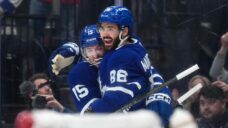
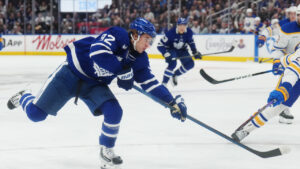
In the midst of a close divisional game against the Buffalo Sabres, Gavin McKenna found himself stapled to the bench from halfway through the second period through to the final buzzer. He played just 6:36 in total. To my memory, it was one of the longest benchings of a non-fourth line player in years in Toronto, and given it happened to their recent number one overall draft pick, we’re going to talk about it.
We’re going to talk about it partially because it’s McKenna, who at times has been electric in his first eight NHL games. But we're also going to talk about it because it felt like a microcosm of a strategic coaching problem in the loss. They stapled talent to the bench while increasing the minutes for their defensive veterans, trying to hold on to a two-goal lead rather than continuing to take it to a Sabres team whose blue line – without Rasmus Dahlin – was badly struggling to manage the Leafs' talent up-front.
So, the kid played under seven minutes, and didn't see the ice at all in the game’s second half. Why?
There are four possible reasons, one of which is the explanation Jim Hiller gave, which would be the most damning of all for the staff. Hiller's explanation was that he didn’t play McKenna for a bit because he doesn’t kill penalties and they had been shorthanded, which led into intermission, and by then it had been too long to throw him back out there.
More on that in a second.
But first, here are the four possible reasons for McKenna's benching and how realistic each are:
Poor play
In this scenario, the coach either felt like McKenna wasn't playing well enough to help the team, or that he wasn't sticking to the system (and was “freelancing” as coaches say), so the coach tried to teach a hard lesson about standards.
If this were the case, I’d be fine with a benching. We're still within the first 10 games of McKenna's career, and you want young players to know there are consequences for not playing the team game. If you don’t set expectations early, it’s tough to enforce them later.
Verdict: Nope.
We’ll get into the video here in a second, but it’s pretty clear you can cross this one out as the correct answer. He wasn’t perfect, but he was dangerous with the puck, and wasn’t short on effort. And if you can’t play McKenna when he performs like he did Thursday -- while your team has the lead in October -- boy, you’ve got issues.
Hiller just going with his veterans
Hiller has a reputation as a coach who too often sat back with his LA Kings teams, particularly with a lead. That showed Thursday night with the Leafs.
In this scenario, he just wanted to play the guys who he knows are committed to the team system and making safe plays first, and even though McKenna wasn’t playing poorly, Hiller just would’ve rather had other guys on the ice. Here, it’s more about the others than McKenna.
Colton Sissons and Nick Paul played over 17 minutes, Teddy Blueger was up around 15 minutes, and so on. Those guys shouldn’t be vilified for that, but there’s a real scenario where this is the correct answer. Hiller felt his team was up, couldn't handle making a mistake (feeling that would hurt more than a great play would help) and so he didn’t want to put a higher event player like McKenna out there.
Verdict: Probably correct.
This was Toronto's eighth game, by the way, and so while this scenario is likely the correct answer, it’s bad coaching logic. Now’s the perfect time to give a young star exposure in harder moments.
Punishment for behaviour
We have zero reason to think this is true, it’s just one of the possible reasons that coaches sometimes bench guys for to send a message about the pecking order. Anyone who’s ever yelled back at a coach has probably experienced the subsequent time of watching the game, rather than playing in it. This is a potential scenario, but not the answer here.
Verdict: No reason to think it’s true.
Coach legitimately lost McKenna and felt he would've been cold
This is the explanation Hiller gave. McKenna didn’t play for half of the second period because of the penalties, then the intermission came, and then it just seemed unfair to put the kid out there when he would've been cold. This is, of course, not great.
McKenna is 18 years old, so he’s not exactly at risk of some soft tissue issue because he’s “cold.” He’s a freak of nature in the talent department, so if anybody could handle getting back out there after a long rest, you should be pretty confident it’s McKenna.
And if this is all true, the effort should be there from the coach at the start of the third period to get McKenna on the ice to find his legs again. The team had already lost John Tavares and had dressed Zach MacEwen (who I thought played well, yet he saw just 5:27 of ice time), so it really put pressure on the rest of the roster.
Verdict: Could’ve been a contributing factor, but shouldn’t have been.
Let’s watch McKenna’s relevant moments to see if we can find something Hiller and the Leafs staff would’ve been upset with.

Real Kyper and Bourne
Nick Kypreos and Justin Bourne talk all things hockey with some of the biggest names in the game. Watch live every weekday on Sportsnet and Sportsnet+ — or listen live on Sportsnet 590 The FAN — from 4 p.m. to 6 p.m. ET.
Full episode
If there’s anything I think the Leafs staff would not have liked about McKenna’s game, it was his play in the neutral zone. They play a 1-2-2 system, so if you’re not up-ice as the “1,” you’re usually locking down a lane as one of the middle “2.”
Now, that can mean a few things which vary given the scenario. Typically as a winger on the wall in the neutral zone, your role is to force a play before the red line (make them ice it or force a pass), and to stop the puck carrier on the way through (or at least slow them down). At worst, you can angle the play to the wall to simplify things for those behind you.
McKenna struggled with that, and there are times I wondered if he should be swinging with the speed (“the speed” being the first, fast skater in a swinging regroup), which we can talk more about.
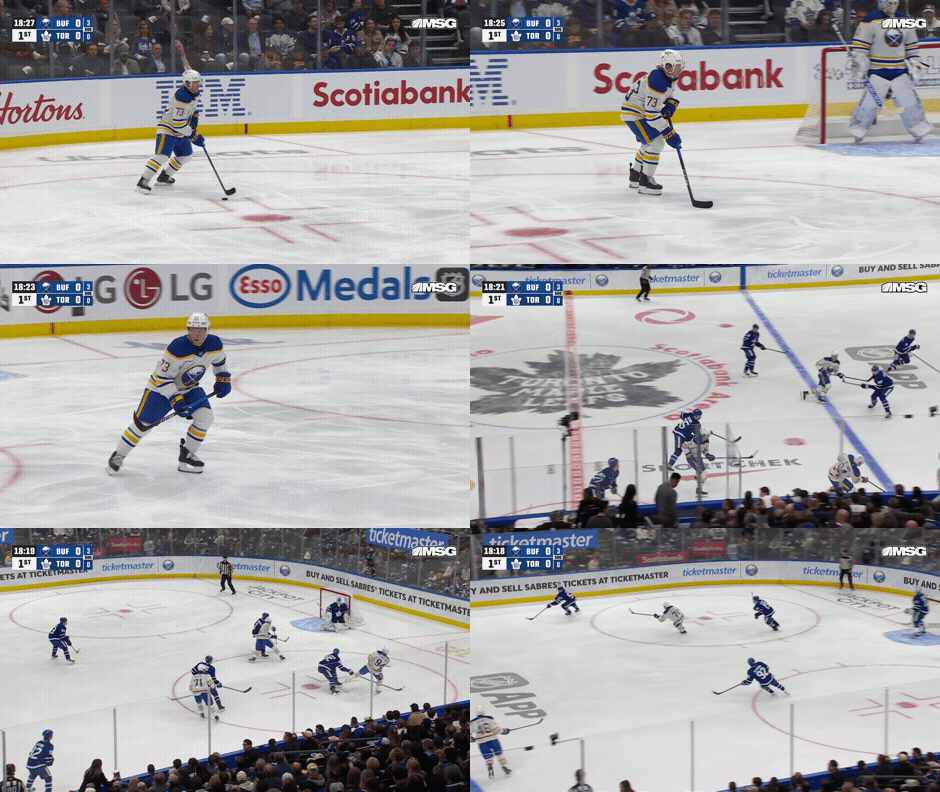
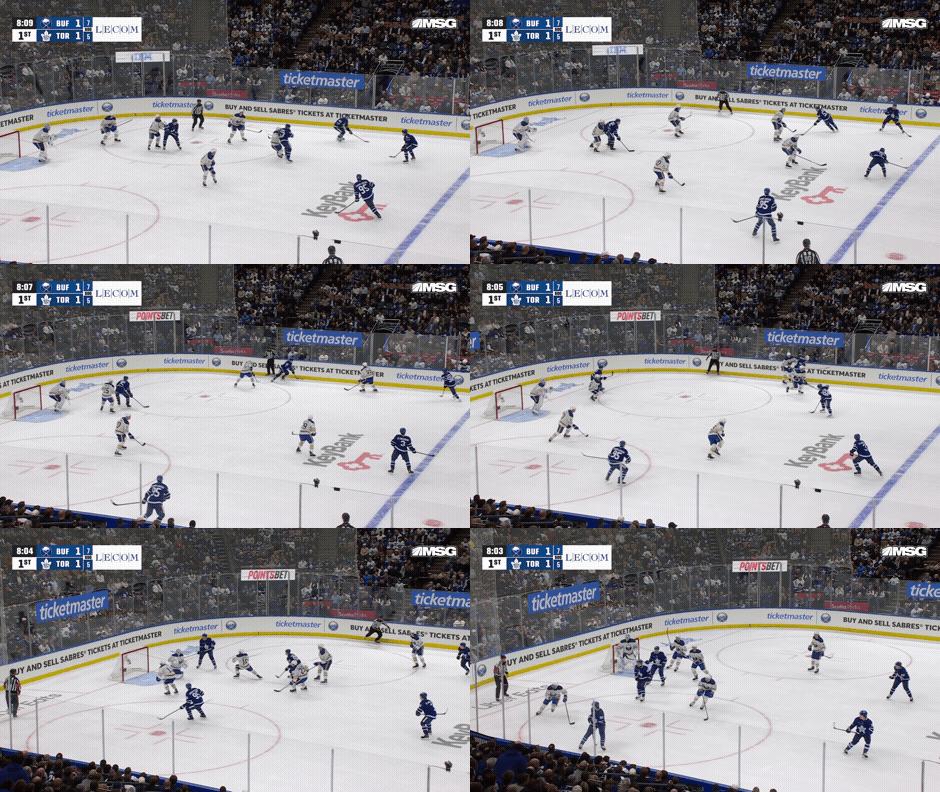
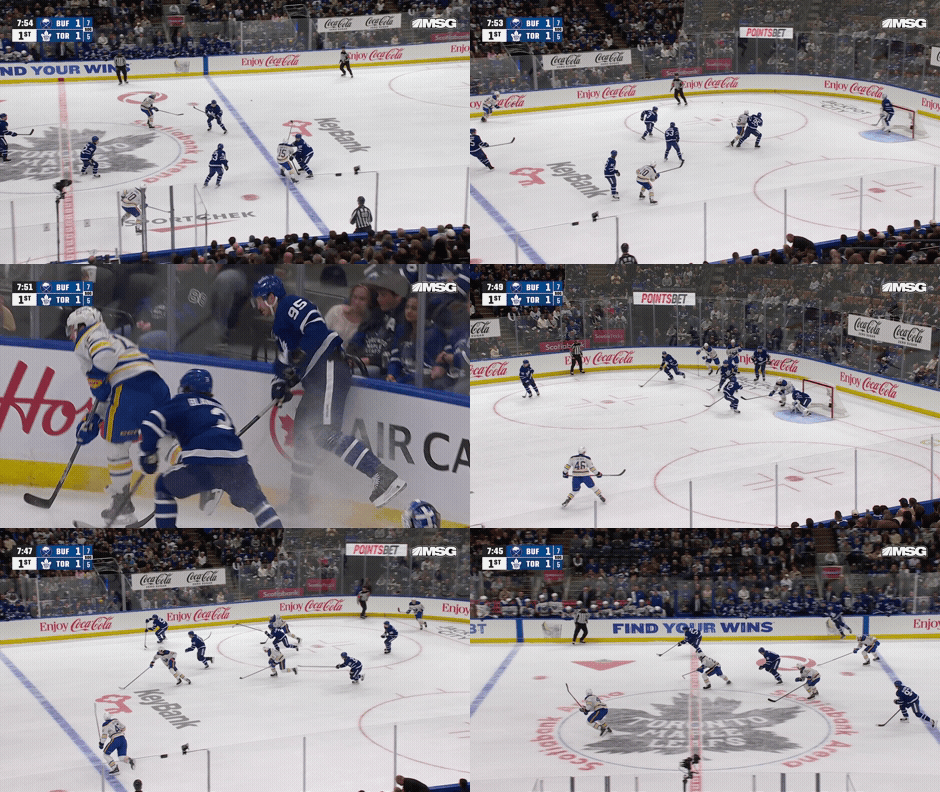
So, the neutral zone (NZ). Here’s the “not great” stuff:
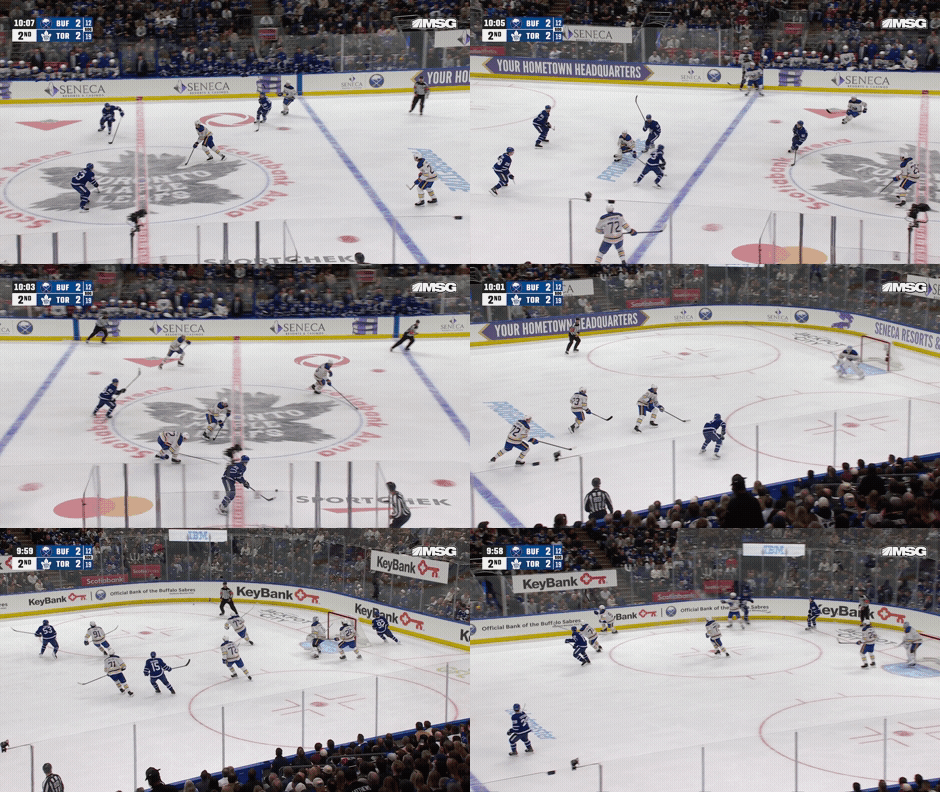
First, he’s in the NZ on the strong side, and he’s essentially that Internet-famous security guard who’s supposed to be patting people down at the gate, but is just running his hands over air.
He’s where McKenna is supposed to be at the red line, but he’s not doing anything.
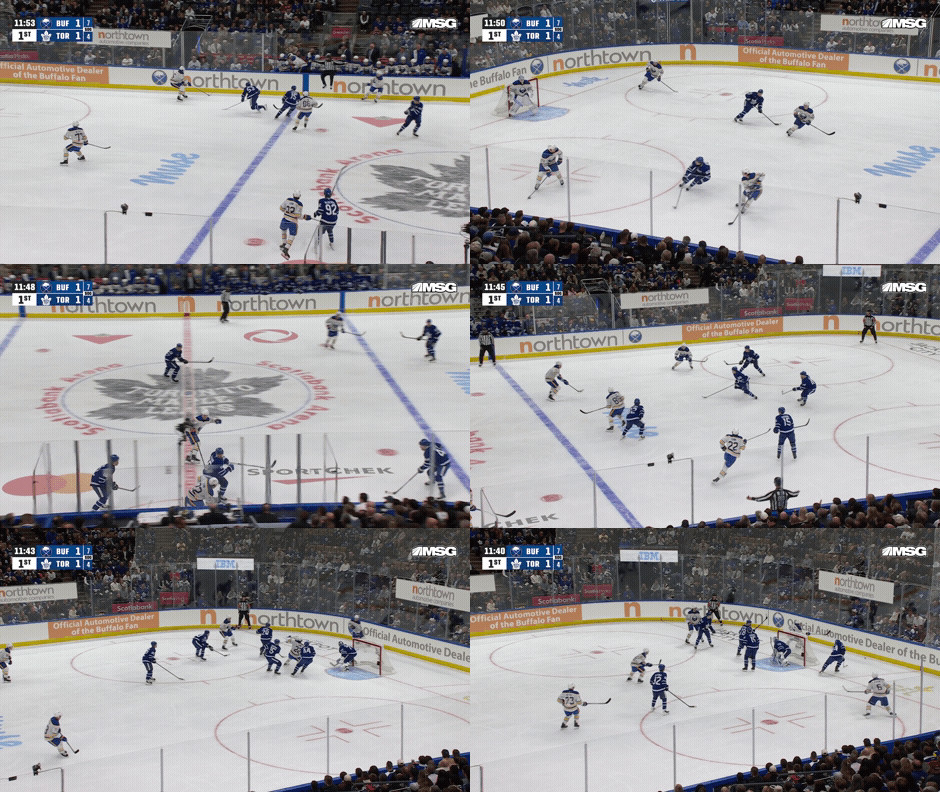
In this next clip, if Easton Cowan is F1, McKenna should be a part of the “2,” and stay above Buffalo’s number 22. Instead, he sinks below him inside the blue line.
And in the next clip McKenna again is not doing much at the bottom of the screen as Buffalo comes up the ice with speed through the neutral zone:
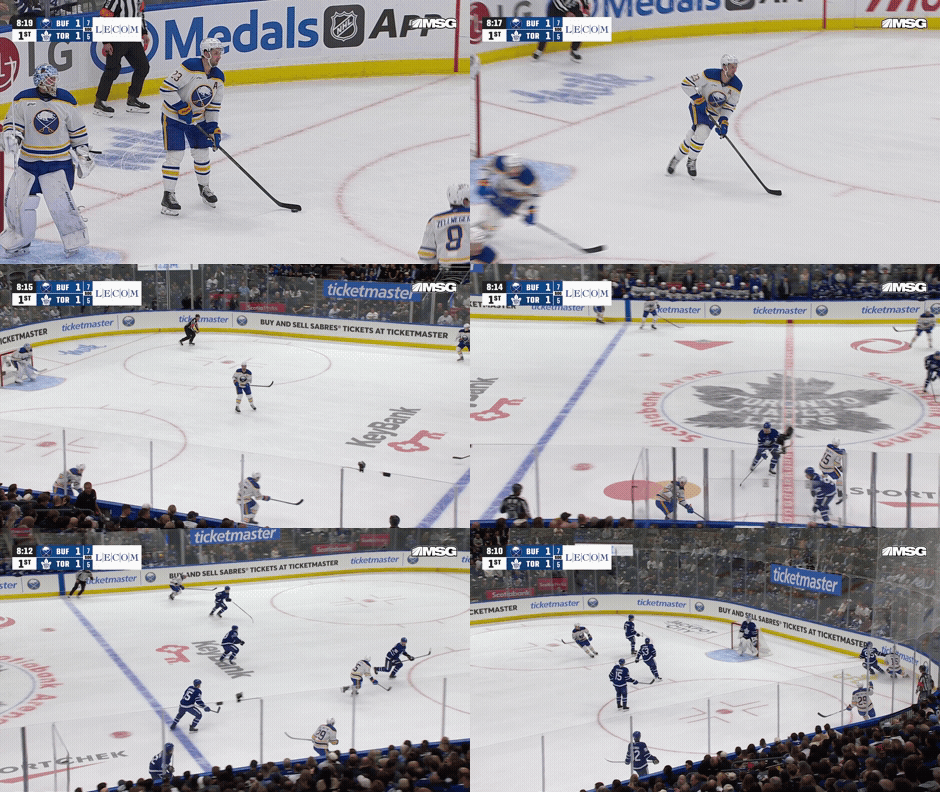
Next, Buffalo runs a double swing breakout and McKenna is on his off-wing in that lane, but gets pulled away from the wall trying to read the play, and again the Sabres are unimpeded through the NZ (Cowan could steer better here, too).
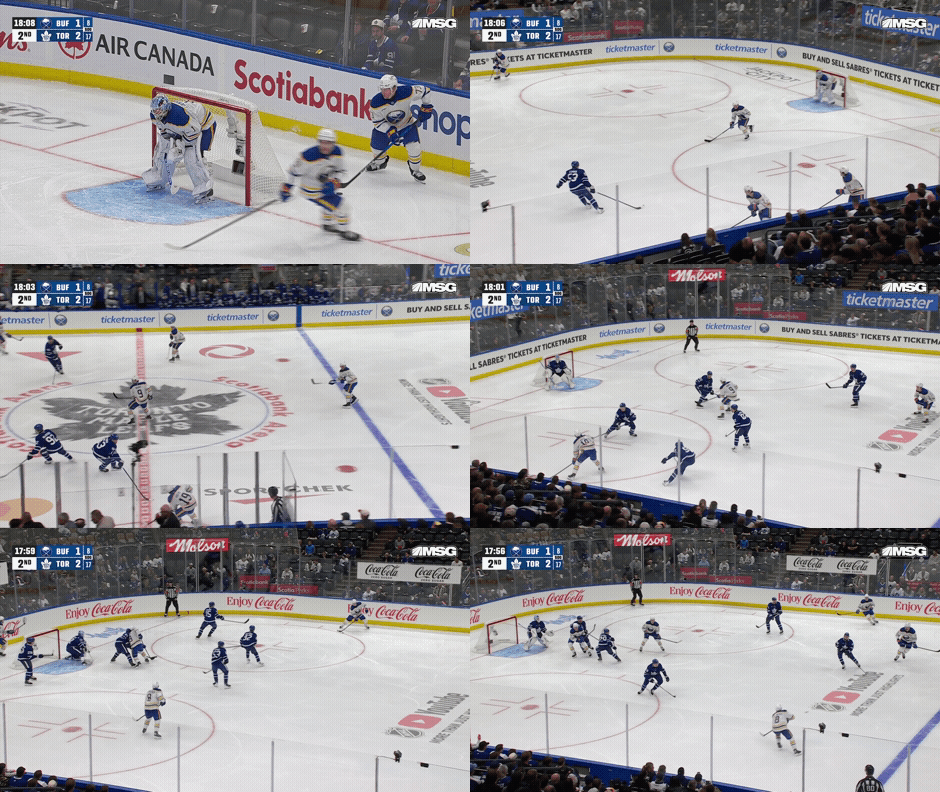
Finally, with the Leafs up a goal, Cowan changes so McKenna becomes F1 in a neutral zone forecheck, and reaches at two pucks -- which if he gets, he’ll be going in alone at Buffalo's net -- but instead gets air, and it leads to the Sabres' tying goal.
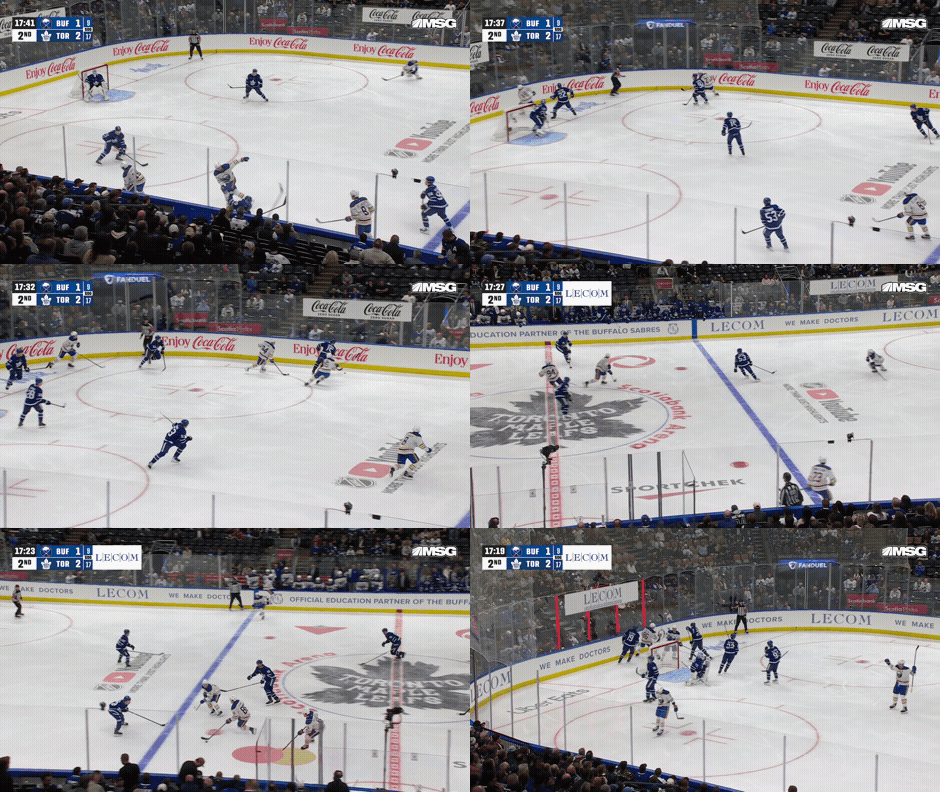
In all, these are five examples from half of a game where the Leafs might have wanted more out of McKenna in the neutral zone. This shows why it’s possible the coaching staff doesn’t fully trust him.
But here’s the thing: those neutral zone plays are in no way major meltdowns, and in each one he’s at least where he should be within the team system. He just has to figure out a way to be more effective, to get above guys, to slow down the opposition. He can do more, but that’s one small part of the game.
A big part of the game is creating offence and that's an extremely hard thing to do. Unless you’re McKenna, apparently. This is what we'll look at next.
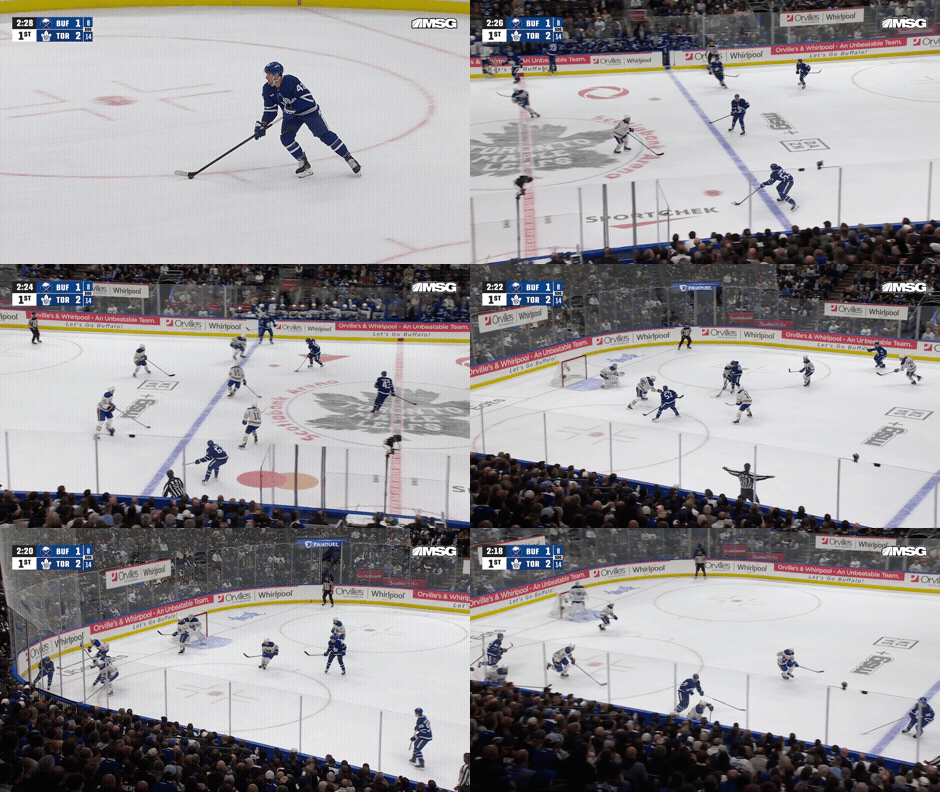
By my count he had about eight puck touches in his sub-seven minutes of ice time, and here's what he did with them. Only one of them -- the first one -- wasn’t great. He got bodied trying to juke a defender, but the Leafs still ended up with the puck and it didn't cause a problem.
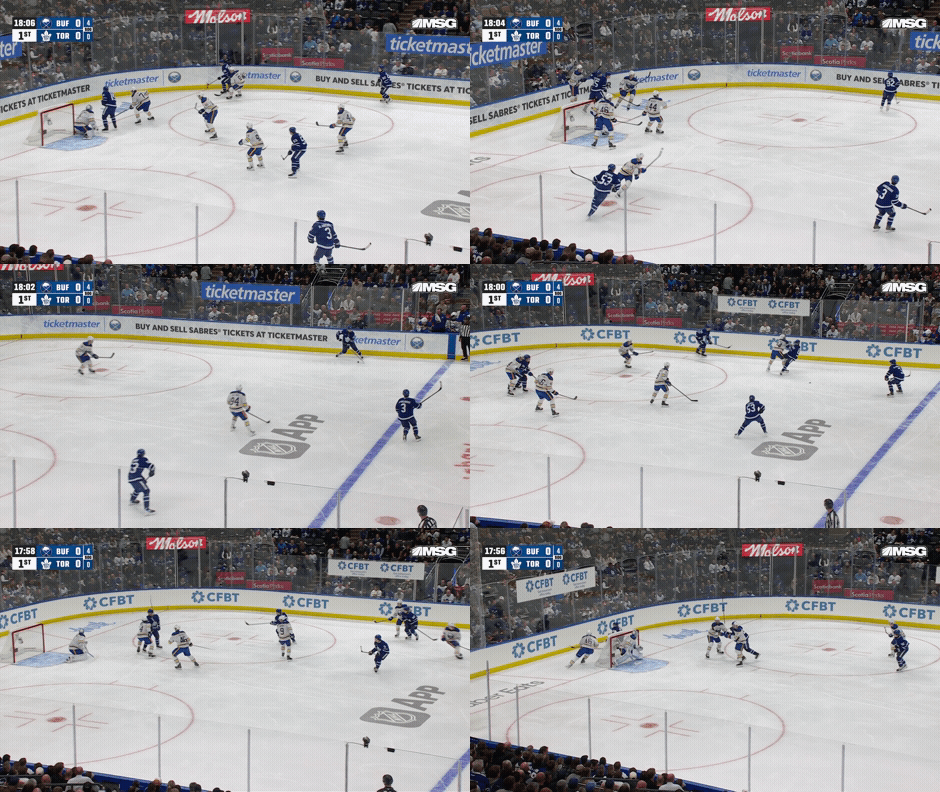
Here, he made an unbelievable no-look, backhand spin-pass right on Cowan's tape in the slot.
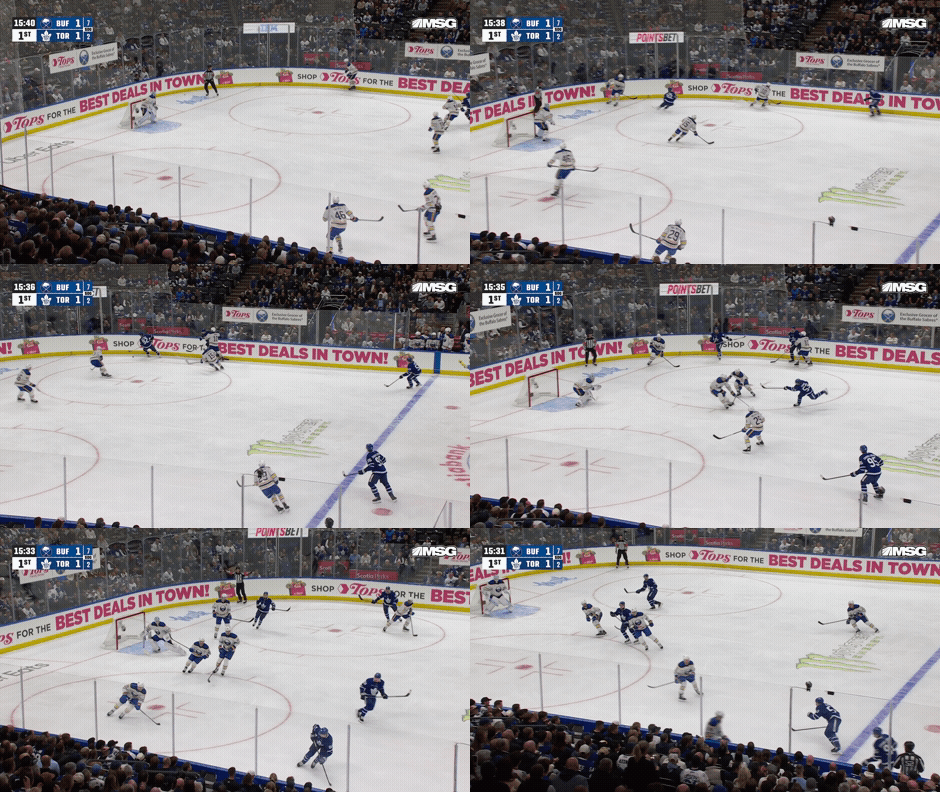
Next, on the breakout, rather than jamming the puck up the wall, McKenna made a play to the middle, which helped lead to a rush chance for the Leafs.
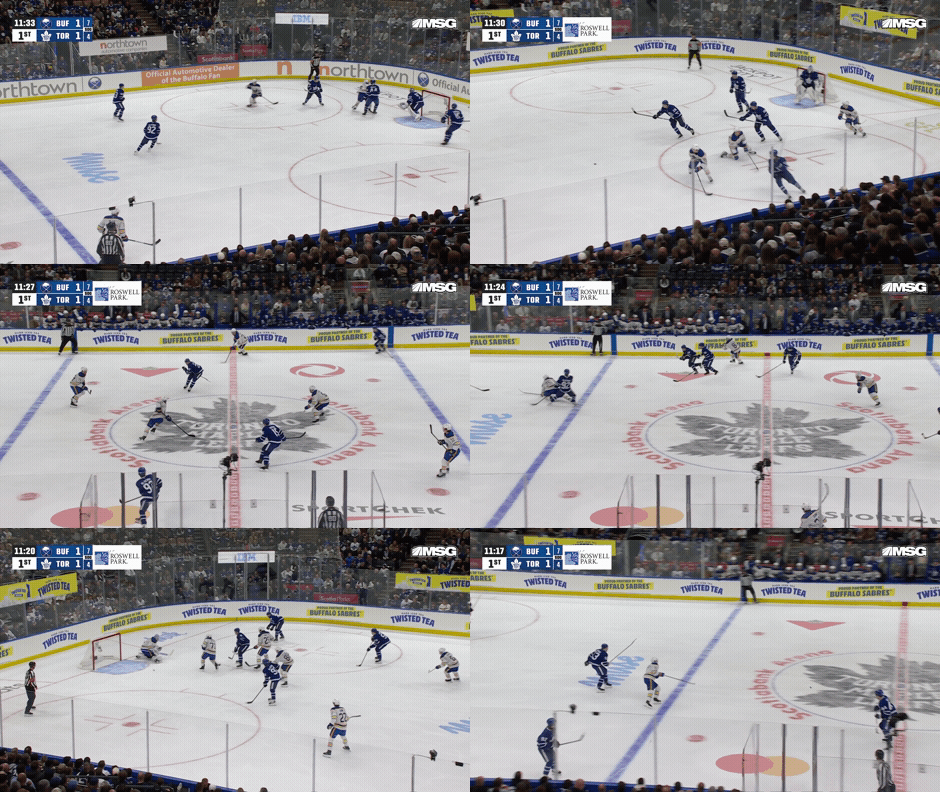
Here he worked a nifty give-and-go in the offensive zone off a won draw to earn a look.
Next, he worked all the way back down to the net front in the defensive zone and started a breakout, which leads to another rush for the Leafs.
Then, on what was his best touch of the night, he took a puck in traffic against a set defence and juked his way to a look directly between the hashmarks. This is a crazy skilled play.
Next clip shows him making a fine play on a set breakout, then he worked hard on the forecheck, stopped and then started to get back on defence.
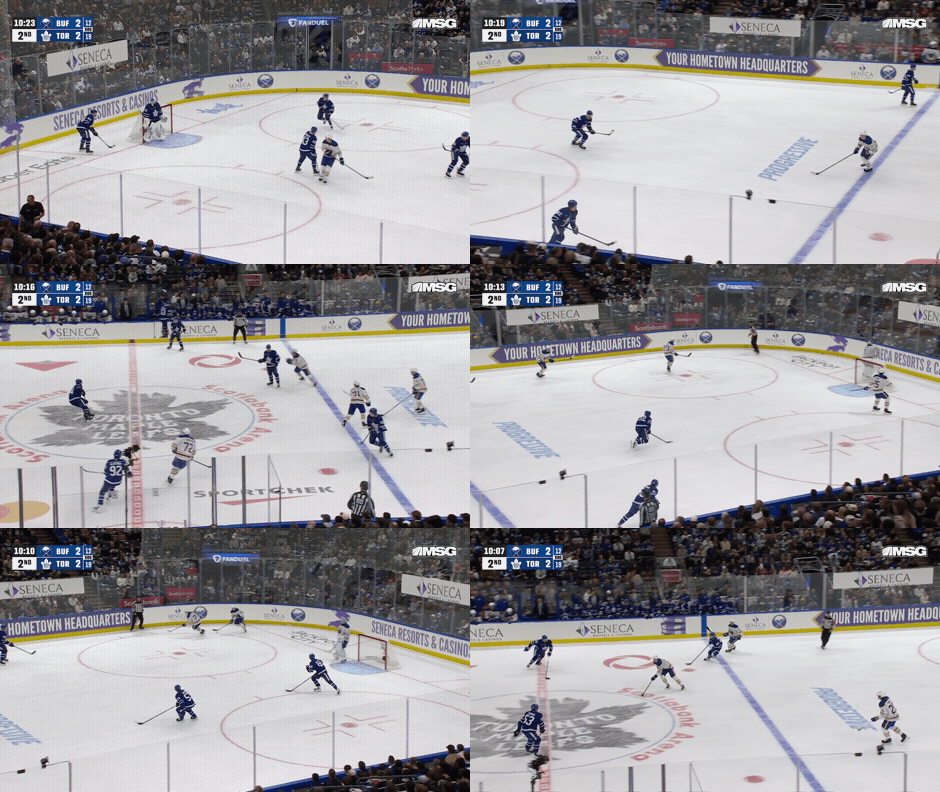
And, on what was his last touch of the night, he dashed up the ice and got off a good shot under the defender’s triangle.
That’s more skilled play in seven minutes of ice time than you can put together for a number of other players who saw 17 minutes against the Sabres.
In all, the conclusion on McKenna's benching has to be: the coaching staff worries about his ability to help keep the puck out of Toronto's net, and so they kept him on the bench once they established the lead.
I noticed Daniel Alfresson talk to McKenna a few times with the whiteboard on the bench, which to me implies conversations about positional play, and some concern they were having with his ability to slow the Sabres down.
If that’s what this is, it seems like the wrong call to make in the eighth game of the year. The Leafs tried to park the bus and played to the Sabres' strengths, rather than lean into their opponents' thin defence even more.
But if the reason for McKenna's benching really was that Hiller lost him amongst the penalty kills and then didn't want to put a cold player on the ice, that’s no good either.
I have time for coaches holding players accountable and benching them, as I think it sets a good precedent. But in this case, these reasons don’t work as justification for me. McKenna had plenty of jump, he came back well on the defensive side, and the Leafs were down to nine forwards in the game.
In isolation, this is not not a big deal. The kid will be fine, he’ll play more against the Islanders on Saturday, and that’s great. The concern for me is what this decision implies about the coaching staff’s priorities.
We’ll see if that’s a one-off, or a season-long shortcoming for the Leafs.